Newsletters – January to February 2026

Young people across Uganda are stepping up as leaders, researchers, and changemakers. In this edition of the Restless Development Uganda newsletter (January–February 2026), we highlight how youth are influencing governance in Karamoja, leading community research, and gaining practical experience through GCAP internships to create lasting impact in their communities.

Promoting Youth Inclusion in Governance and Accountability (YIGA) Project

Youth Influence in Governance and Accountability (YIGA) project seeks to improve youth participation and influence in governance across Karamoja and Uganda. It supports empowered young people and responsive governance systems that reflect youth needs and realities. The Challenge: Uganda’s population is among the youngest globally, with 73.2% under the age of 30. Yet, youth participation …

Report Assessing the Influence of Climate Change on Sexual and Reproductive Health Outcomes

Report Overview Climate change is intensifying sexual and reproductive health (SRH) challenges for young people in Uganda’s Jinja and Mayuge districts by disrupting health systems and worsening existing vulnerabilities. Extreme weather events such as floods, droughts, and heatwaves frequently limit access to SRH services, particularly in rural areas. Over 45% of respondents reported difficulty accessing …

A Report On Integration Of Sexual And Reproductive Health Into Climate Justice Movements

Report On Integration Of Sexual And Reproductive Health Into Climate Justice Movements From The Perspectives Of Young People With Disabilities In Jinja District Integrating sexual and reproductive health (SRH) into climate justice movements is essential to addressing the overlapping vulnerabilities faced by young people with disabilities in Jinja District, Uganda. Despite existing commitments to SRH …

Youth Researchers Academy

Program Overview Young persons with disabilities are often excluded from the broader discussions on sexual reproductive health. When they are included, it is often tokenistic and done only to appear diverse. They do not participate meaningfully for numerous reasons, namely, a lack of agency and data, accessibility challenges, limited leadership opportunities, and low investment in …

The Connect Project

The Challenge: According to the 2024 census, Uganda remains one of the world’s youngest nations, with 50.5% of its population aged 17 years and under, and a further 22.7% between the ages of 18–30. Despite their numbers, young people’s needs are often unmet, and they continue to face the consequences of poor governance, underrepresentation, and …

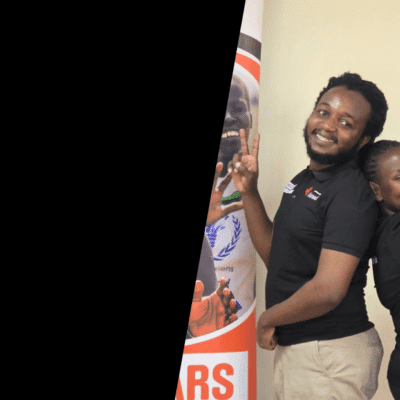
SHE SOARS Youth Advisory Board: Powering Youth-Led Change

Program Overview The Youth Advisory Board (YAB) is at the heart of the SHE SOARS project—an initiative working across Kenya, Uganda, and Zambia to advance the sexual and reproductive health and rights (SRHR) of out-of-school adolescent girls. Established as a fully youth-led governance body, the YAB  are the watchdog for meaningful youth engagement, ensuring that the …

Default thumbnail image

Sharing the Load, Strengthening the Family: Benard’s Story

Benard Asiku, during an Inter Generational Dialogue (IGD) session, he was leading in his community. Benard Asiku, during an Inter Generational Dialogue (IGD) session, he was leading in his community. Benard Asiku, an Inter-Generational Dialogue (IGD) mentor under the Sexual and Reproductive Health and Economic empowerment (SHE) Supporting Out-of-school Adolescent girls’ Rights and Skills (SOARS) …

Annual Report 2024

In 2024, Restless Development Uganda reached 8.5 million young people, sparking youth-led action in climate justice, democracy, gender and sexual health. With 746 young leaders trained and 427 organisations joining the Youth Collective, this year’s impact reflects the growing force of Youth Power.

“When a Girl Can Earn, She Can Thrive”

By Ssaazi Kizito (SHE SOARS Youth Advisory Board) One of the most striking lessons I learned from the 2025 SHE SOARS All Partners Meeting in Lusaka is that adolescent health and economic empowerment are not parallel priorities—they are mutually reinforcing realities. When young people, for example, adolescent girls, are equipped with practical, income-generating skills, their …