
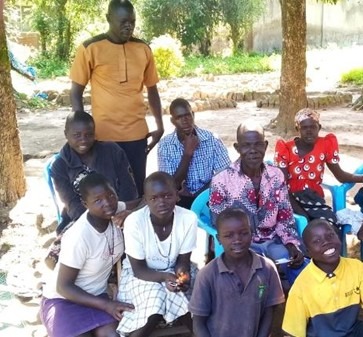
Benard Asiku, during an Inter Generational Dialogue (IGD) session, he was leading in his community.
Benard Asiku, during an Inter Generational Dialogue (IGD) session, he was leading in his community.
Benard Asiku, an Inter-Generational Dialogue (IGD) mentor under the Sexual and Reproductive Health and Economic empowerment (SHE) Supporting Out-of-school Adolescent girls’ Rights and Skills (SOARS) project, comes from Ociba village in Dadamu sub-county, Arua City.
For much of his life, Benard believed that his role as a man was limited to leadership, providing financially, grazing animals, and digging. His wife, Alice, on the other hand, was expected to shoulder all household chores, including childcare, cooking, and other domestic duties. These attitudes reflect wider social norms in Uganda, where men are seen as the natural heads of households, controlling decision-making, women’s movements, and even their income.
A 2019 report by the Uganda National Bureau of Statistics confirmed this imbalance, showing that women aged 18–30, followed by those aged 31–59, spend the largest share of their weekly time on unpaid care work. This kind of work, including feeding children, nursing the sick, cooking, cleaning, and collecting fuel or water, is crucial for families and society, yet it falls mainly on women and girls, often at the expense of their education, employment, and well-being.
As Sustainable Development Goal 5.4 advocates, recognising and sharing this burden is essential for achieving gender equality.
Through the SHE SOARS project, Restless Development trains IGD mentors to lead community dialogues using a dedicated curriculum. These sessions focus on transforming harmful gender and social norms that hold back adolescents, youth, women, and men from enjoying their rights, especially their sexual and reproductive health rights.
Benard was trained in 2024 and soon began leading awareness sessions on issues such as gender roles, equality, and gender-based violence.
At first, his own life did not fully reflect the lessons he was teaching. However, as he guided others in dialogue, he began to question his own biases. He realised that actual change must start at home. One day, Benard approached Alice and told her he wanted to share household responsibilities and childcare. At first, she was doubtful. But as his sincerity became clear, she welcomed the change.
Together, they began dividing tasks. Benard learned how to cook, wash clothes, and look after their children. Their relationship transformed, communication improved, respect deepened, and their children benefited from having a more present and supportive father.
We now divide tasks and responsibilities with my children and wife. I have learnt how to cook, wash clothes, and even help with childcare. I realised these tasks are not ‘feminine,’ I can be a capable and loving partner.
Community members soon noticed the difference. They admired the positive changes in Benard and in his household. His relationships with others grew stronger, and he became an even more effective IGD mentor, practising the values he promotes.

