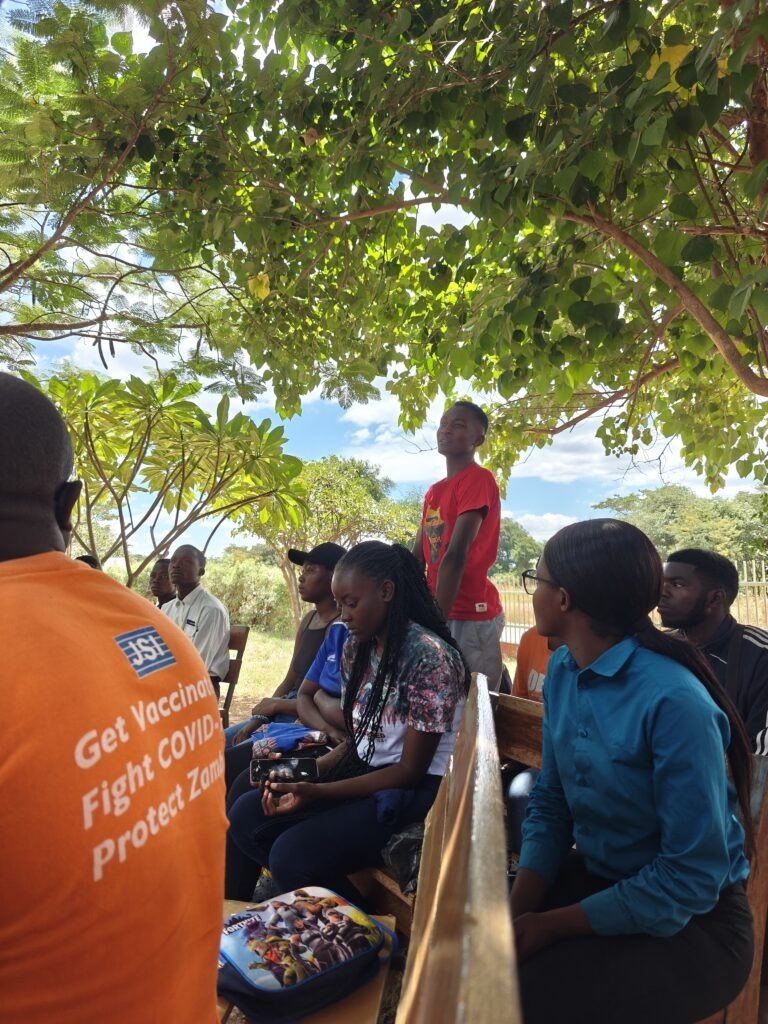
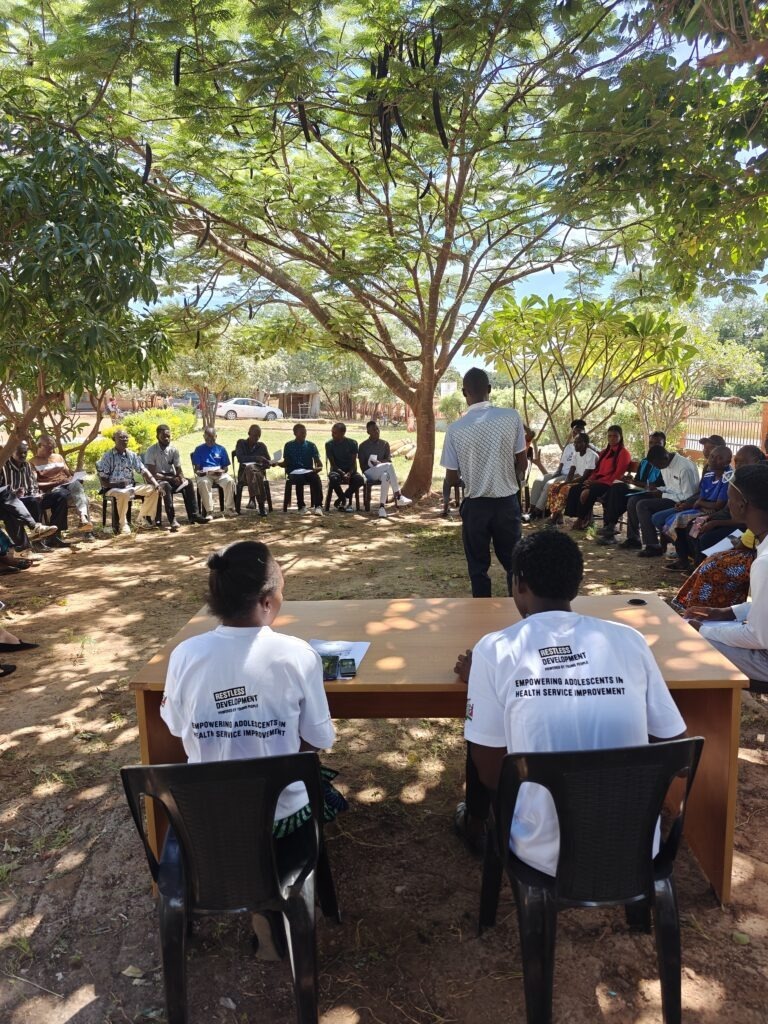
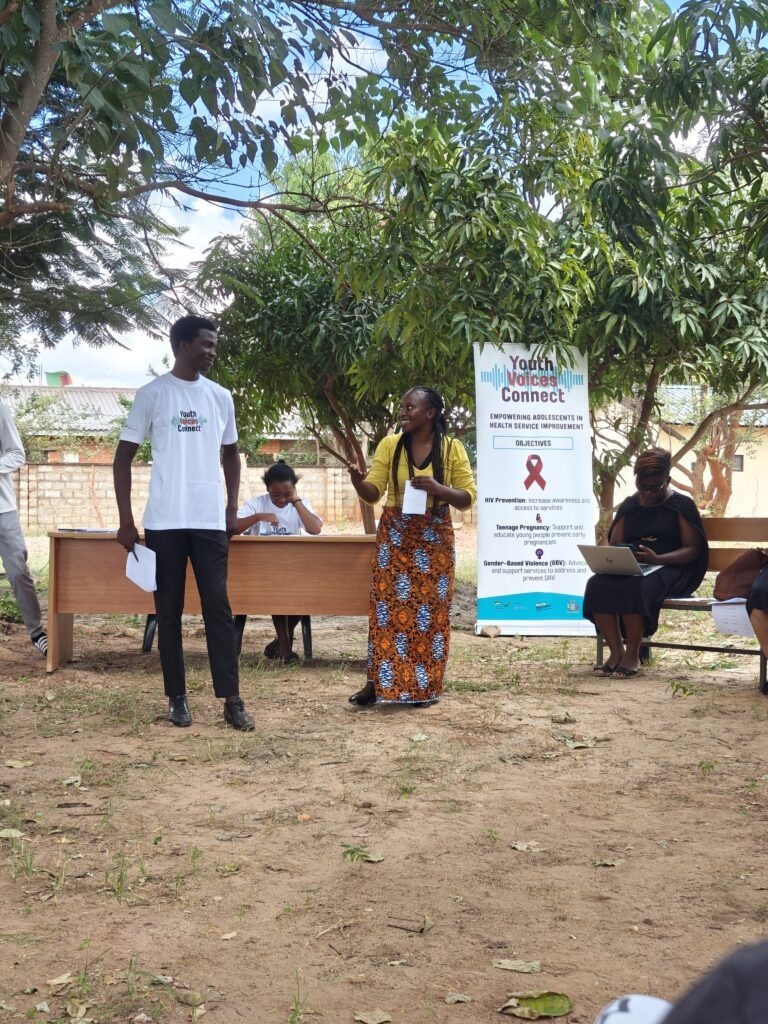
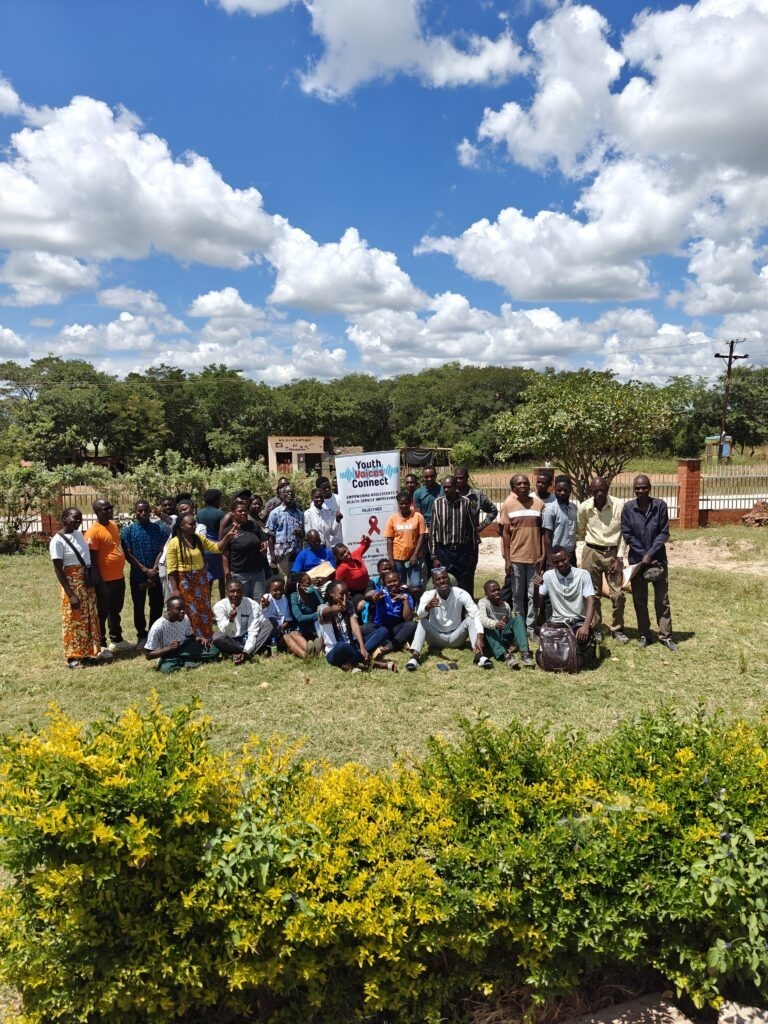
Strengthening adolescent- and youth-friendly health services through youth-led social accountability in Zambia.
Youth Voices Connect is a GIZ-supported project that helps adolescents and young people shape better, more youth-friendly health services through meaningful participation and social accountability. It focuses on making feedback from young people visible and actionable at the community, district, and service delivery level—so improvements are not left to chance.
The project works with adolescents and youth aged 10 to 24 and takes a gender-responsive approach, recognising that barriers to information and services are not experienced equally.
Where the project works
Youth Voices Connect operates in Lusaka, Southern Province and Luapula Province in Zambia. It builds on existing community structures and local leadership, rather than creating parallel systems that disappear when a project ends.
What Youth Voices Connect supports
At the core, the project equips young people with practical, gender-responsive knowledge related to sexual and reproductive health and rights (SRHR) and supports them to engage safely and constructively with the people and systems around them. This includes strengthening the link between schools and health services, so that learning and service provision reinforce each other instead of operating in silos.
Collaboration is a deliberate part of the approach. Youth Voices Connect encourages closer engagement between learners, teachers, and healthcare providers to improve communication, strengthen referrals, and support more consistent youth-friendly practice.
Why it matters
When young people can raise concerns and priorities in a structured way—and when communities and providers have a clear path to respond—services are more likely to become accessible, respectful, and appropriate for adolescents and youth. That is the practical promise of social accountability: not noise, but a feedback loop that leads to change.
Who is involved
The project brings together adolescents and young people, community structures and leaders, schools, and health service providers. This shared approach helps create a clearer feedback loop: young people can speak up, adults and institutions can respond, and improvements can be tracked over time.
Gallery