
Beatrice Belaphonte Mlai, 23, grew up in Mabawa Ward, Mkanjuni Street, in Tanga City. Like many young people in coastal Tanzania, her life has always been closely connected to the ocean, farming, and the everyday realities of communities that depend on natural resources to survive.She holds a degree in Agriculture and Aquatic Sciences, and while studying, she volunteered in fisheries-related training programmes through the University of Dodoma (UDOM). What began as volunteering soon became something more personal.
I didn’t choose this field by accident. I grew up seeing how people depend on the ocean and the land, but also how easily they can be damaged. I kept asking myself, how can young people protect these resources and still earn a living
Noticing What Others Overlooked
While volunteering, Beatrice spent time listening to young people fishers, graduates, informal workers many of whom were struggling to find stable livelihoods. What stood out was not a lack of effort, but a lack of information and opportunity.
Young people were working hard, but most of them didn’t know about the opportunities that exist in fisheries, agriculture, or even local government programmes. Some had given up before they even started, not because they were lazy, but because no one had ever guided them
Tanga, a city surrounded by the ocean and made up largely of young people, holds enormous potential. Yet that potential often goes untapped. Beatrice began speaking informally to fellow youth—sharing what she knew, encouraging discussions, and slowly stepping into advocacy spaces. Still, the impact felt limited.
I was trying to speak, but my voice felt small. I knew the issues were real, but I didn’t yet have the tools or the platform to reach many people
A Chance to Grow: Shiriki Tujenge Tanga Yetu
In 2025, Beatrice learned about an opportunity through her local government office: the Shiriki Tujenge Tanga Yetu Project was looking for Youth Accountability Advocates (YAAs). Encouraged, but unsure, she applied—submitting her CV and a letter of introduction from the local authority. When she was selected, it marked a turning point.
I remember thinking, maybe this is where I stop just talking and start learning how change actually happens. I didn’t feel like an expert—I felt like a student who was finally being trusted
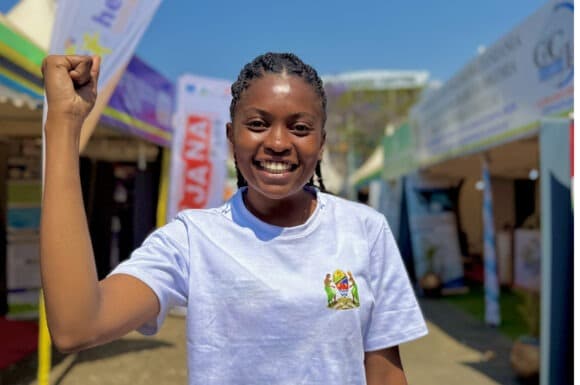
The project supports young people in Tanga to participate meaningfully in governance. Through training and mentorship, Youth Accountability Advocates learn about civic rights and responsibilities, community dialogue, data use, and how to engage constructively with local leaders.
Learning by Doing, Leading with Others
Through Shiriki Tujenge Tanga Yetu, Beatrice did not work alone. She worked with other young people—listening, organising, and sometimes struggling together. The project helped her develop practical skills, but also patience and confidence.
What changed me most was learning that leadership is not about standing in front. Sometimes it’s about sitting with people, hearing their frustrations, and helping them believe their voice matters
Together with other youth in Tanga, Beatrice supported peer accountability initiatives, encouraged youth groups to organise themselves, and helped them engage in income-generating activities. Some groups began formalising their operations and registering officially—small but meaningful steps toward sustainability.
When young people start seeing themselves as accountable, not just to others, but to their own future, you can see the shift. They show up differently
Stepping Outside Her Comfort Zone
Beatrice’s journey also took her beyond Tanga. She participated in the National Youth Week celebrations in Mbeya, where she met young people from across the country, each carrying their own struggles and ideas.
That experience reminded me that the challenges we face in Tanga are not unique. Across Tanzania, young people are trying to find dignity in work and a place in decision-making. It made me feel less alone—and more responsible
What Comes Next
As the Shiriki Tujenge Tanga Yetu project comes to a close, Beatrice is looking ahead with clarity and humility. She plans to focus on aquaculture entrepreneurship, building on the same knowledge she has been sharing with youth groups especially supporting them to register, organise, and operate sustainably.
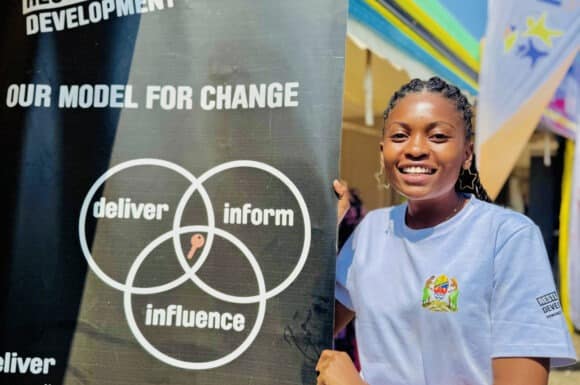
I don’t see this as the end of something. I see it as a beginning. I want to build something practical—something that allows me to earn, but also to continue walking with other young people who are still trying to find their way

