
A Lawyer at the Frontlines of Women’s Rights
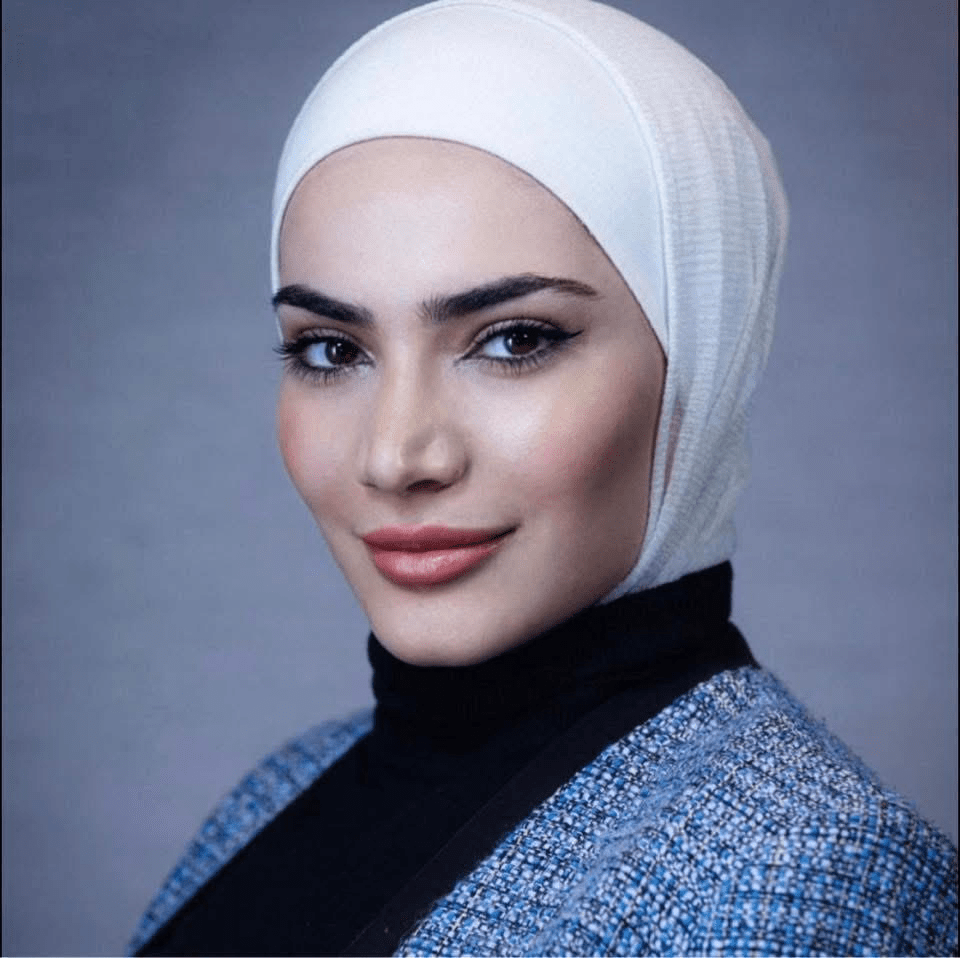
In a conservative area of Jordan, where patriarchal norms shape the daily lives of women and conversations about their bodies are forbidden, lawyer and human-rights defender Roa’a has given voice to the voiceless and shaped powerful feminist resistance. Her work, a lifelong passion, is reshaping how young women learn, speak, and defend their rights.
“I’ve always been a feminist by instinct,” she says. “But the place I was born into shaped my cause.”
Growing up in a deeply patriarchal environment, Roa’a witnessed violence, child marriage, and the silencing of girls long before she had the words to describe these injustices. Many of her classmates and neighbours, some as young as 14, were married off, continuously being abused with no access to protection or legal support. Their realities became her driving force.
“Since childhood, I felt responsible to defend every girl around me,” she recalls. “Now, as a lawyer, I only take cases related to women’s rights. It was never just a job—it was a continuation of my childhood promise.”
Roa’a studied law and international law with a focus on human rights, building a career in women’s rights organisations across Jordan. Today, she works with the Working Women Association, one of the country’s oldest organisations dedicated to women’s empowerment.
Inside the organisation, she works on critical programmes addressing UNSCR 1325, gender-based violence, economic empowerment, and sexual and reproductive health and rights (SRHR) under the We Lead programme.
But her proudest achievement is something quieter and far more rebellious.
A Feminist Club Disguised as a Book Group
In Zarqa, where feminist language can provoke backlash or threats, Roa’a launched with the organisation a “book club” that is, in reality, a feminist discussion circle.
Every month, women gather to talk about the most urgent issues: genocide and injustices in Gaza and Sudan, gender inequality, violence, and the everyday pain they carry and live with. They share stories and unburden themselves in a safe space intentionally created for discussions and solidarity.
“We don’t call it a feminist space,” Roa’a explains. “We present it as a book club for security reasons. But it is our form of resistance, and I am very proud of it.”
This disguised safe space has become a lifeline for women in the area, many of whom have never before had a room where they could speak freely about their lives, bodies, and rights.
The Cost of Speaking About SRHR
Talking about sexual and reproductive health in Jordan is associated with stigma and danger. Roa’a describes the fear surrounding even the simplest words.
“If we say ‘sex,’ it’s horrifying,” she says. “People tell us, ‘You’ve already taken every right—why are you asking for SRHR too?’”
To continue the work without backlash, she and her colleagues learnt to adapt, to “hide behind terminology”, contextualise the topics, and introduce critical thinking in subtle, culturally grounded ways.
“We started protecting ourselves, but we never stopped. Women have the right to know their bodies. Society made us feel like our bodies are a problem. But it is our right to explore, to understand, and to speak.”
SRHR Challenges for Young Women in Jordan
According to Roa’a, the challenges are layered:
- Lack of awareness and knowledge
- Myths and misconceptions about women’s bodies remain widespread.
- Limited access to health services
- Outside Amman, clinics are scarce and often too expensive.
- Rise in child marriage
- Legal loopholes allow girls under 15 to be married under “exceptions”, a reality that continues to endanger thousands.
“These violations are not abstract; they are happening to girls I know, to my neighbours, to women in my community,” she says.
What We Lead Taught Her
Through the We Lead programme, Roa’a and her Community of Action facilitated SRHR awareness sessions that broke long-held taboos.
“In the beginning, people feared the words ‘sex’ and ‘bodies.’ Over time, young women started joining by choice, they wanted to learn. They asked for more sessions. That is the achievement.”
For Roa’a, awareness is not just about knowledge; it is about reclaiming the right to ask questions.
“Sometimes awareness starts when someone feels safe enough to say, ‘I want to know.’ Breaking that fear is powerful.”
Policy Change She Urgently Needs
Her priority is clear and firm:
“No marriage under 18. No exceptions.”
Child marriage continues to rise, and she believes the law must protect girls—without loopholes, without excuses.
What Gives Her Hope
Despite the violence, economic hardship, and political instability across the region, from genocide to war, Roa’a’s hope comes from one place: women’s voices.
“The voices of women in Jordan, Gaza, Sudan, Lebanon, everywhere—give me strength,” she says. “This feminist solidarity is powerful. We all come from the same system of oppression, and we feel each other deeply.”
The eagerness of young women, who were once afraid to ask to know about their rights and bodies, and the solidarity beyond borders that keeps Roa’a going.
A Quiet Force in Chaos
Roa’a’s work extends beyond public speeches and national campaigns; it is defined by the legal cases she defends and the voices of women she amplifies. She is reshaping what resistance looks like.And in her words, “If I’m not talking about our rights as women, what am I doing? A a citizen, as a feminist, as a human being, this is my cause and my responsibility.”

