
As the implementing partner leading the Youth Advocacy Grant component of the GreenShift Nepal project, Restless Development Nepal conducted a two day Capacity Building Session for Third Year Youth Advocacy Groups and Waste Smart Fellows from 12 to 13 April 2026 in Sauraha, Chitwan. GreenShift Nepal is a consortium initiative that promotes circular economy approaches and environmental sustainability, with the Youth Advocacy Grant component supporting young people to lead environmental action and influence change within their communities.
The training brought together young leaders and fellows from across municipalities to strengthen their capacity in youth advocacy, environmental governance, safeguarding, communication, and data driven action on waste management.
Participants included members of Rotaract Club of Central Rupandehi, Boys Union Club, and Khadak Nagar Yuwa Sanjal, alongside Waste Smart Fellows working at the municipal level.
The training opened with sessions on project orientation, expectations, and an overview of the GreenShift Nepal project and its Year Three deliverables. Participants explored the roles and responsibilities of Youth Advocacy Groups and Waste Smart Fellows, followed by discussions on SWOT analysis and local environmental realities.
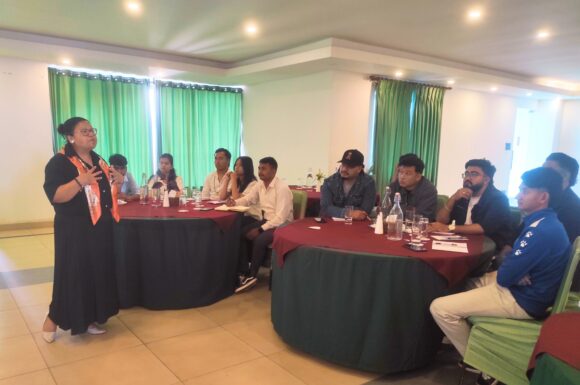
A dedicated session on GESI and safeguarding focused on youth advocacy in gender responsive planning processes. Participants reflected on how social inclusion, participation, and accountability connect to environmental action and local governance.
The first day also covered environmental systems and municipal environmental issues, alongside GreenShift safeguarding guidelines. Sessions on the circular economy, waste management, zero waste approaches, and plastic literacy encouraged participants to examine waste systems beyond collection and disposal. Through group discussions and exercises, participants connected these concepts to the realities in their own municipalities.
The day concluded with communication and visibility sessions focused on responsible storytelling, donor compliance, consent, branding guidelines, and social media management. Participants discussed practical approaches to documentation, including the ethical use of photos, videos, and community stories.
On the second day, sessions shifted towards implementation systems and operational processes. Participants received orientation on monitoring and evaluation mechanisms, financial compliance requirements, fraud and bribery prevention policies, and financial safeguarding reporting procedures.
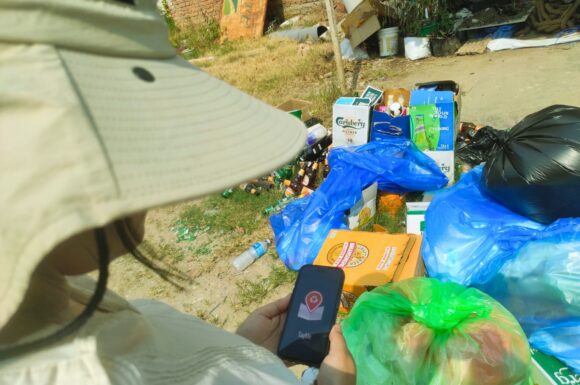
A major focus of the day was the TagMe app, which supports waste hotspot mapping and data driven advocacy. Participants engaged in demonstrations and practical exercises using the platform and discussed campaign approaches for community engagement and environmental reporting.
The training closed with work plan discussions, post training reflections, and action planning for Year Three implementation. Youth Advocacy Groups and Waste Smart Fellows developed shared priorities and outlined next steps for municipal level engagement.
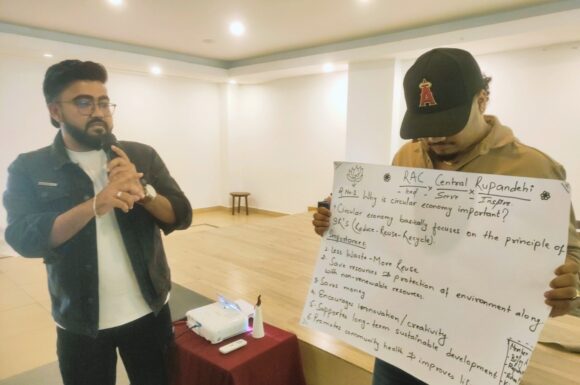
Through the two day session, participants strengthened technical knowledge, coordination mechanisms, and practical tools required to advance youth led environmental advocacy and circular economy efforts under GreenShift Nepal.

