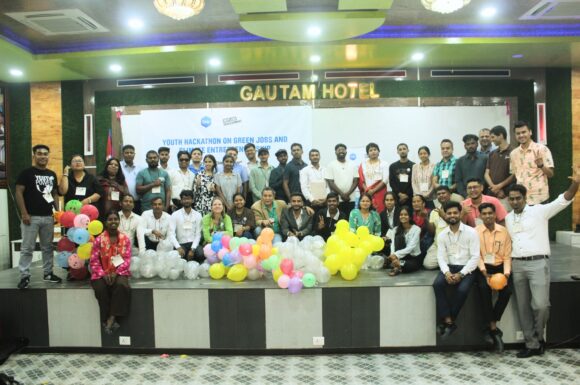
On April 23, 2026, young people from across Madhesh Province gathered in Bardibas for a Youth Hackathon focused on climate resilient livelihoods, green entrepreneurship, and the future of work in Nepal. Organized by Restless Development Nepal and SNV Nepal (opens in a new tab), the event created a youth centered space for dialogue, systems thinking, and collaborative problem solving around some of the most urgent livelihood challenges facing young people in Madhesh today.
The Youth Hack marked the first step toward co-creating a localized Center of Excellence in Madhesh Province. The Center of Excellence is envisioned as a place-based platform that connects young people to green skills, finance, markets, entrepreneurship support, and policy engagement.
Young people from Madhesh, local government representatives, businesses, financial institutions, and civil society actors came together throughout the day to map barriers, identify opportunities, and design locally grounded solutions for climate smart livelihoods and entrepreneurship.

Participants reflected on the realities shaping youth livelihoods in Madhesh. Across discussions and group exercises, several recurring themes emerged. Young people identified unemployment as one of the biggest challenges facing their communities, alongside poverty, limited access to technical skills, lack of financing, limited mentorship opportunities, and continued pressure to migrate abroad for work. Participants also highlighted barriers including fear of failure, limited market access, land fragmentation, and the absence of concessional loans and entrepreneurship support systems.
One major challenge I see in Madhesh Province is that local employment opportunities remain very limited.
Bikash Sah, Youth Hack Participant
In Madhesh, the limited use of technology in agriculture reduces productivity, and without proper forecasting, even the crops that are produced are often lost to natural disasters.
Aasha Kumari Sah, Youth Hack Participant
The main issue I see in Madhesh is the lack of opportunities for young people, which limits their ability to develop leadership and strengthen their capacities.
Ankit Chaudhary, Youth Hack Participant
The event used a condensed design thinking methodology that guided participants through stages of empathy mapping, problem definition, ideation, and prototype development. Young people worked in mixed groups focused on regenerative agriculture, renewable energy, waste management and circular economy, digital livelihoods, and tourism and culture.
Through these collaborative exercises, participants developed solution prototypes rooted in the realities of their own communities. Proposed ideas included youth-led solar installation and energy consulting services, waste recycling and organic fertilizer enterprises, agro-processing businesses focused on branding and market access, digital livelihood initiatives supported through mentorship and certification, and cultural tourism platforms designed to promote local heritage and entrepreneurship.
The process encouraged participants to think beyond isolated interventions and instead explore systems level approaches to youth employment and green entrepreneurship. Discussions reflected a broader ambition to support young people in Madhesh to become entrepreneurs, innovators, and job creators within their own communities.
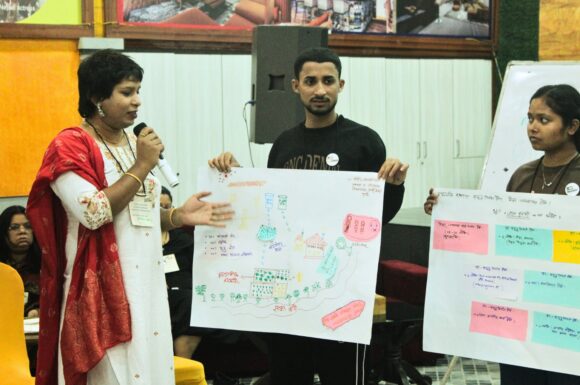
A recurring message throughout the Youth Hack was the desire for meaningful opportunities within Madhesh itself.
I imagine a future where local employment and local production ensure that every young person in Madhesh has meaningful opportunities at home, choosing to build their future in Nepal.
Bikash Sah, Youth Hack Participant
I imagine a future where Madhesh becomes a hub of agriculture, and where young people can engage in farming and still earn more than enough to thrive and are no longer compelled to seek work abroad.
Aasha Kumari Sah, Youth Hack Participant
I imagine a future where young people of Madhesh can proudly choose to stay in their own land, create opportunities for themselves, and believe they can contribute meaningfully to the country’s economy. I am hopeful that such an environment is taking shape.
Ankit Chaudhary, Youth Hack Participant
I imagine a future where not a single young person from Madhesh has to leave the country due to a lack of opportunities, and where each can create meaningful work for themselves.
Rohit Kumar Mahato, Youth Hack Participant
I imagine a future where Madhesh is vibrant and full of promise, where every household and every community is home to at least one young entrepreneur, and where young people drive a shift from imports to exports, building a more self reliant economy.
Ganga Sah, Youth Hack Participant
I imagine a future where entrepreneurship empowers young people and students like us to create new employment opportunities.
Ram Krishna Bhandari, Youth Hack Participant
The event was also attended by Prahlad Kumar Chhetri, Mayor of Bardibas, who engaged with participants and reflected on the importance of supporting youth driven solutions emerging from the Hackathon.
I see that young people at this event are engaging in practical work and mapping real problems. If there is any way I can support these efforts, please reach out with what you have mapped. I am committed to standing with you and working alongside you.
Prahlad Kumar Chhetri, Mayor of Bardibas
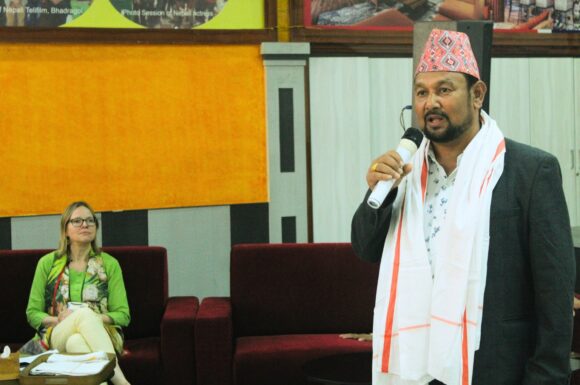
For Restless Development and SNV, the event represented part of a longer term effort to strengthen climate resilient local economies and support youth entrepreneurship within Nepal.
So we at Restless Development know and believe that young people are at the forefront of change and development. We very much believe that young people are creative, innovative, and strategic in their thinking. This Youth Hack provided us with some great ideas that we can continue to discuss and take forward.
Franklin Paul, Head of Country (India and Nepal), Restless Development
Insights and recommendations generated during the Youth Hackathon will contribute to future discussions and planning around the Center of Excellence in Madhesh Province. These localized platforms aim to strengthen youth entrepreneurship ecosystems through interconnected pathways including access to markets and services, finance and productive assets, skills and agency building, and inclusive systems transformation.
As discussions continue through follow up engagements and strategic roundtables, the ideas generated by young people in Bardibas are expected to help shape future investments, partnerships, and entrepreneurship support systems around green jobs and climate resilient livelihoods in Nepal.
The direction from participants remained clear throughout the event: young people in Madhesh are ready to lead the transition toward greener livelihoods, stronger local economies, and more sustainable futures.